Showing posts with label Brain Health. Show all posts

Monday, September 01, 2008

Which Is Better? Eating Fish Or Taking Fish Oil Capsules?


There is nothing like a day out on the water, FISHING! The only thing better than a fish dinner is eating fish that you have caught by yourself. Somehow, it seems to taste better! You can always guarantee the freshness and handling that way. My favorites are walleye, northern pike, bass and trout. I live near the Chicago area and this is some of what is available in my local waters. If I lived on the coast, I'm sure you would find me surf casting on the beach in most of my my spare time. I usually catch just enough to eat and I let the rest go until another day.

What is so great about fish? Other than it tastes good, it is good for you! It is a great source of protein and the Omega 3 Fatty Acids are good for your brain and your eyesight as well as your heart. Fish and fish oil contain two important omega-3 fatty acids: eicosapentanoic acid (EPA) and docosahexanoic acid (DHA). We do not get enough of these in our western diet.

HEALTHY FATS
Omega-3 and omega-6 fatty acids are the biosynthetic precursors of a family of compounds called eicosanoids (prostaglandins, thromboxins, and leucotriens). These compounds are hormone-like substances that help retain normal health processes in our bodies. It is important to maintain an appropriate balance of omega-3 and omega-6 in the diet as these two substances work together to promote health. Yet despite the clear health benefits associated with omega-3 fatty acids, dietary surveys indicate that most of us do not obtain enough omega-3 fatty acids from our diets.

Here is a list of some of the benefits of eating fish and their Omega 3 Fatty Acids:

[SALMON]


  • They make your platelets less sticky and lower fibrinogen levels (fibrinogen is a blood-clotting factor). This means they decrease the chance of forming blood clots throughout your body, thus reducing the likelihood of a heart attack, stroke, or embolism (clot)


  • They make your red blood cells more flexible so your blood flows more easily, lowering your blood pressure and improving delivery of nutrients and oxygen to your cells


  • They lower blood fats (especially triglycerides) and increase HDL (good) cholesterol levels


  • They stabilise your heartbeat, preventing heartbeat abnormalities (arrhythmia) that can lead to cardiac arrest


  • They may reduce microalbuminuria (an abnormally high amount of protein in the urine) and thus help patients on dialysis (a machine to filter the kidneys)


  • They may elevate your mood, lift depression and improve your ability to deal with stress


  • They reduce inflammation and can relieve symptoms of arthritis, and


  • They may reduce the output of the stress hormone adrenaline.’
If you think this is a bunch of nonsense and wishful thinking, think again. The FDA does not allow health claims on most supplements unless there is overwhelming evidence to back up that claim. Next time you pick up a bottle of fish oil capsules, read the label. I think you will find several different claims as to the effects on heart health. One of them is "consumption of EPA and DHA omega-3 fatty acids may reduce the risk of coronary heart disease." The American Heart Association says, "Omega-3 fatty acids benefit the heart of healthy people, and those at high risk of —or who have — cardiovascular disease."

To reap the benefits of eating fish or taking fish oil capsules, it will depend on what kind of fish it is and where it comes from.

The FDA put out a warning a few years back about the risks of mercury in fish. They warned pregnant women that they should not eat more than 12 ounces of fish per week. It is the larger fish like the list below that seem to contain the highest amounts of methylmercury. Smaller fish have a little bit of mercury in them and these larger predators eat them and develop higher concentrations that can be dangerous to the nervous system and the brain.

Shark
Swordfish
King mackerel
Tilefish

Man has "polluted the nest" by emitting toxins into the air we breathe and the water that our fish swim in. If you test fish for contaminants, you will find other things like heavy metals, PCBs, pesticides, and organic residues. Unless your fish comes from the pristine waters off the coast of Alaska or Iceland, they probably contain some of these contaminants.

So, is there another way to get these Omega 3 Fatty Acids without ingesting the dangerous contaminants? How about fish oil capsules?

Unfortunately, the fish oil capsules that you buy at the grocery store or pharmacy could possibly contain whatever you are trying to stay away from. Many of them contain algae and other things that could cause stomach bloat and gas. A bad experience here could keep you from benefiting and having a positive experience from taking fish oil. Results from a study published in 1998 indicate that tests of 44 different fish oil supplement brands sold in 15 countries between 1994 and 1995 revealed appreciable quantities of organochlorines including PCBs and pesticide residues.

The difference comes in the quality of the fish oil. How can you tell the difference? A quality fish oil product has gone through a molecular distillation process. This removes the dangerous contaminants and concentrates the amounts of
eicosapentanoic acid (EPA) and docosahexanoic acid (DHA). Some people call this a "pharmaceutical-grade" fish oil. Actually, there is not such thing as pharmaceutical-grade fish oil just as there is no such thing as pharmaceutical-grade apple juice. At the crux of the issue is the fact that there simply is no agreed-upon set of standards (in technical terms, a monograph) for fish oil supplements to date. These official monographs are set by the US Pharmacopoeia Convention (USPC) to provide standards for the active ingredients in drugs, biologics, dietary supplements, and devices, defining their 'strength, quality, and purity' for human use. Simply put, nothing can truthfully be deemed ‘pharmaceutical grade' until it has been officially defined by an approved USPC monograph.High quality fish oil is a natural product that is obtained from fish but is highly filtered and concentrated for purity and safety. If you look at the grocery store brands, they usually contain a lot less of the Omega 3 fatty acids compared to a quality "pharmaceutical-grade" brand. Here is an example of what is contained in the Costco brand of fish oil capsules:

Fish Oil Concentrate 1000 mg
EPA (Eicosapentaenoic Acid) 180 mg,
DHA (Docosahexaenoic Acid) 120 mg

Here is an example of a brand that has gone through a molecular distillation process:

Fish Oil Concentrate 1000 mg
EPA (EICOSAPENTAENOIC ACID) 290 mg
DHA (DOCOSAHEXAENOIC ACID) 235 mg

The higher quality pill has the toxins filtered out and is more concentrated. It should also contain some vitamin E. This is an antioxidant that will keep the pill from going rancid while it sits on your shelf at home. Look at the vitamin E as a natural preservative. You could also keep it in your refrigerator after you open the bottle, if you wish.


VITAMIN D
Most purification processes for fish oil remove any vitamin D from the product. Yet, experts now widely believe that a majority of people are
not getting enough vitamin D, which has been shown to have many health benefits, such as supporting bone health and healthy lung function. If you can find a high quality fish oil that contains vitamin D, that is a plus. The omega-3 fatty acids in fish oil and vitamin D are also important structural components of retinal and neural tissues and may help retain eye health.

I take four pills (4 x 1000 m
g.) spread throughout the day. My 90 year old father takes the same amount. He used to have arthritis pains in his shoulder that would wake him up at night. Those pains have been gone for the last three years now. He sleeps like a baby. His cholesterol levels (as well as mine) are perfectly normal without the use of statin drugs that have dangerous side effects.


If you are a vegetarian or have any problems with eating fish or taking fish oil, here is an alternative for you.

I take a fish oil capsule called Biomega by Usana Health Sciences. It goes through a double molecular distillation process and contains vitamin D and E. It does not get any purer than that. Other good brands are made by Carlson and Icelandic.


Here are some links to articles about the benefits of taking fish oil capsules:

If you are trying to keep from getting Alzheimer's Disease, read these articles.

Brain health dramatically improved by intake of omega-3 fatty acids and fish oils

Staving Off Alzheimer's Disease With The Right Diet, Prescriptions


If you are pregnant, read this article


If you have arthritis

Research: Anti-Inflammatory Effects of Omega-3 Fatty Acid in Fish Oil

Sunday, August 10, 2008

Do Statins Make You Stupid?

World-wide, some 25 million people take statins, including Zocor, Mevacor, Crestor, Pravachol and Vytorin to lower their cholesterol. Could they also be lowering their IQ at the same time?

In a recent Wall Street Journal article, Orli Etingin, vice chairman of medicine at New York Presbyterian Hospital and the director of the Iris Cantor Women's Health Center, declared that, "This drug makes women stupid." She told of a typical patient in her 40s, unable to concentrate or recall words. Tests found nothing amiss, but when the woman stopped taking Lipitor, the symptoms vanished. When she resumed taking Lipitor, they returned. I've seen this in maybe two dozen patients," Dr. Etingin said later, adding that they did better on other statins. "This is just observational, of course. We really need more studies, particularly on cognitive effects and women."

Researchers at the University of California at San Diego are nearing completion of a randomized controlled trial examining the effects of statins on thinking, mood, behavior, and quality of life. Separately, the UCSD researchers are collecting anecdotal experiences of patients, good and bad, on statins; memory problems are the second most common side effect, after muscle aches, in about 5,000 reports to date.

"We have some compelling cases," says Beatrice Golomb, the study's lead researcher. In one of them, a San Diego woman, Jane Brunzie, was so forgetful that her daughter was investigating Alzheimer's care for her and refused to let her babysit for her 9-year-old granddaughter. Then the mother stopped taking a statin. "Literally, within eight days, I was back to normal -- it was that dramatic," says Mrs. Brunzie, 69 years old.Doctors put her on different statins three more times. "They'd say, 'Here, try these samples.' Doctors don't want to give up on it," she says. "Within a few days of starting another one, I'd start losing my words again," says Mrs. Brunzie, who has gone back to volunteering at the local elementary school she loves and is trying to bring her cholesterol down with dietary changes instead."I feel very blessed -- I got about 99% of my memory back," she adds. "But I worry about people like me who are starting to lose their words who may think they have just normal aging and it may not be."


The brain is largely made of of cholesterol, much of it in the myelin sheaths
that insulate nerve cells and in the synapses that transmit nerve impulses. Lowering cholesterol could slow the connections that facilitate thought and memory. Statins may also lead to the formation of abnormal proteins seen in the brains of Alzheimer's patients.


The cognitive changes can affect men as well as women. But women on statins are often simultaneously losing estrogen due to menopause, which can also cause cognitive changes. "Women are getting hit with a double whammy," says Elizabeth Lee Vliet, a women's health physician in Tucson, Ariz., who has a background in neuroendochronology.


According to the "LDL hypothesis," lowering bad cholesterol prevents plaque buildup in the arteries. And that, in theory, reduces the risk of heart attack and stroke. Vytorin -- which combines Merck's Zocor, a statin, and Schering-Plough's Zetia, a new class of LDL-lowering medicine -- does lower bad cholesterol but has also been proven to thicken the plaque in the carotid arteries (in the neck) of patients more than in those who took Zocor alone -- apparently contradicting the "LDL hypothesis." A blocked carotid artery can lead to restricted blood flow to the brain and a stroke.


Another cholesterol lowering drug called, Torcetrapib (Pfizer) represented a new class of cholesterol medicine designed not only to lower LDL cholesterol but also to boost HDL, or "good" cholesterol. But the results of two large-scale studies linked torcetrapib to deaths and showed it failed to prevent the buildup of arterial plaque. Soon after, Pfizer abandoned the project.


Myth: High cholesterol Goes Hand In Hand With Heart Disease


In the Framingham heart study done near Boston that spanned 30 years , the researchers concluded that high cholesterol was a risk factor for heart
disease, but when one really dissects the data, one must question how they came to that conclusion. For example, when the participants of the study are plotted on a graph it clearly shows that those with cholesterol levels between 182 and 222 did not survive as long as those with higher cholesterol levels of between 222 and 261. The study shows that about half the people with heart disease had low cholesterol, and half the people without heart disease had high cholesterol.


Most studies have found that for women, high cholesterol is not a risk factor for heart disease at all - in fact, the death rate for women is five times higher in those with very low cholesterol. In a Canadian study that followed 5000 healthy middle-aged men for 12 years, they found that high cholesterol was not associated with heart disease at all. And in another study done at the University Hospital in Toronto that looked at cholesterol levels in 120 men that previously had heart attacks, they found that just as many men that had second heart attacks had low cholesterol levels as those that had high.
Why is it that over half the people who die of heart disease do not have high cholesterol? Could it be that cholesterol is not the main problem?

A personal note


My parents were taking Zocor for a number of years. At $60 per month, it was quite expensive. My mother died of Alzheimer's disease last year. My father has Parkinson's related dementia too. Before I took him off statins, my dad was experiencing muscle pain, numbness, memory loss,
muscle weakness and many other side effects listed on the Zocor label. Although they claim that these side effects are rare, I believe that they are just under reported. Read the article below on, Is Your Doctor in Denial?


Other Side Effects Of Statins


Talk to your physician about the side effects of statin drugs which might include:


Inability to concentrate
Depression
Confusion
Impotence
Amnesia
Lowered sex drive
Disorientation
Violent Behavior
Weakened immune system
Shortness of breath
Liver damage
Fatigue
Kidney failure
Nerve pain
Suicide
Death
Muscle weakness
Rhabdomyolysis (painful bursting of muscle cells)

Getting Less Of What You Need
Statins block the production of Co enzyme Q10 in your body. Why is that so dangerous? Coenzyme Q10 is very important for heart function, it acts as an antioxidant in conjunction with Vitamin E, and it is important in energy metabolism in the mitochondria of muscles, which is why muscle pain is a common side effect of statin drugs. Your heart is one of your biggest and most important muscles. If your heart is weakened by the lack of Co enzyme Q10, statins could actually cause you to have a heart attack. Co enzyme Q10 is important for healthy brain function as well, and when Co enzyme Q10 levels are low, through statin use or otherwise, memory is affected.
Lower Your Chance Of Heart Disease Naturally
Eskimos, who eat a traditional diet of almost pure saturated fat (whale and seal blubber) have almost a zero incidence of heart disease. Danes, on the other hand, eat a high fat diet but have a much higher occurrence of heart disease. What's the difference? Eskimos eat a high-fat, high-cholesterol diet but one rich in fish, especially those containing the omega-3 fatty acids EPA and docosahexaenoic acid (DHA). These fatty acids lower plasma of very low density lipoproteins (VLDL) and triglyceride (a type of fat in your blood) concentrations by depressing synthesis of triglycerides in the liver.

If you are not eating at least 3 meals a week that includes fatty, oily fish, you might want to consider taking some pharmaceutical-grade fish oil pills. These are more concentrated and purer than your regular grocery store brand. They are also less likely to give you the "fish burps" and you will have to take half as many pills because of the concentration.

Researchers at University Hospital in Basel Switzerland did a statistical analysis, called a “meta-analysis” of 97 double-blind, controlled studies, involving 137,140 people who received a heart-disease “intervention (statins, niacin, two other pharmaceutical drugs, diet or fish oil) and 138,976 who received a placebo. The remarkable findings: Fish oil reduced cardiac deaths by 32 percent; statins by 22 percent. Fish oil cut deaths from all causes by 23 percent; statins, by 13 percent. That means, say experts, that omega-3 fish oil was 45 per more effective than statins in preventing heart fatalities and 77 percent better at saving lives in general. (Marco Studer., Arch Intern Med 2005; 165:725-730)

Fish oil’s strong anti inflammatory activity is also a prime reason for its cardiovascular protection, say the Swiss scientists. Other reasons fish oil might beat statins: Omega-3s help regulate heart rhythms, preventing sudden cardiac deaths; thwart formation of blood clots; improve endothelial and vascular function, reduce triglycerides, lower blood pressure, and raise good HDL cholesterol. (Mori TA, Curr Atheroscler Rep 2004 Nov; 6(6): 461-7)

Fish oil has NONE of the side effects found with statins.

First Step Therapy

Doctors have always been encouraged by the medical community to help their patients to become heart healthy by prescribing healthy lifestyle changes like diet and exercise prior to beginning any medication at the early signs of these diseases. This is referred to as First-Step Therapy. Physicians have for the most part been very discouraged with the results of First-Step Therapy and have a tendency to simply write a prescription without offering their patients an opportunity to improve their clinical situation with healthy lifestyle changes. This is happening because physicians believe that their patients will simply not be able to make these lifestyle changes or even if they do, they will not be that effective. This attitude along with the tremendous amount of marketing by the pharmaceutical industry directly to the patient has led individuals to believe that their best option is to just begin taking medication. However, it is becoming more evident each and every day that there is also an inherit risk with taking any medication. In fact, adverse drug reactions to properly prescribed and properly administered medication are the FOURTH leading cause of death in this country. 

Monday, June 09, 2008

Can Cholesterol Lowering Drugs Cause Parkinson's Disease?

My mother died of Alzheimer's disease about this time last year. Click here to read about it. My father will be 90 next month and he is suffering from Parkinson's and related dementia. Back in the 1970's or 1980's, their doctor put them both on a drug called Zocor to lower their cholesterol. Drugs like Zocor, Lipitor, Crestor and Pravachol are in a class of drugs called "statins."


Many of these drugs have known side effects like:


  • Abdominal Pain
  • Arrhythmia
  • Asthenia
  • Myalgia
  • Myopathy
  • Pancreatitis
  • Rhabdomyolysis
  • Kidney Failure/Dialysis
  • Hospitalization
  • Death
Now, scientists are exploring the connection between statin drug usage and the development of Parkinson's disease. American researchers have found that patients with low levels of LDL are more than three times more likely to have Parkinson's than those with high levels. Here is a news article that appeared in the Telegraph (U.K.) last year.
Scientist raises fears over statins and Parkinson's +
Here are some highlights from the article:

Dr Xue Mei Huang, an assistant professor of neurology at the University of North Carolina's School of Medicine, was "very concerned" by her study's findings and plans a 16,000-patient survey to examine the possible role of statins.

Dr Huang, whose study was published in the journal Movement Disorders, said there was a well-established link between Parkinson's and apoE2, a gene associated with lower LDL cholesterol.
Participants in her study with LDL levels lower than 114 mg/dl (milligrams per decilitre) had a 3.5-fold higher risk of Parkinson's than participants with LDL levels of more than 138 mg/dl.
It was unclear, however, whether the low cholesterol levels in those with Parkinson's predated the disease.
Asked whether she was worried by the initial results, Dr Huang told Chemical and Industry magazine: "Yes I am very concerned, which is why I am planning a 16,000-patient study to examine the possible role of statins."
Dr. Ronald Ziman, a California neurologist and board member of the American Parkinson Disease Association, said he is intrigued by the study.

"Parkinson's is a neurodegenerative illness like Alzheimer's. We know lipid profiles have a bearing on Alzheimer's, and there are a lot of similarities between Parkinson's and Alzheimer's. So I wouldn't be surprised by the link" between LDL and Parkinson's that the University of North Carolina team described," Dr. Ziman said.

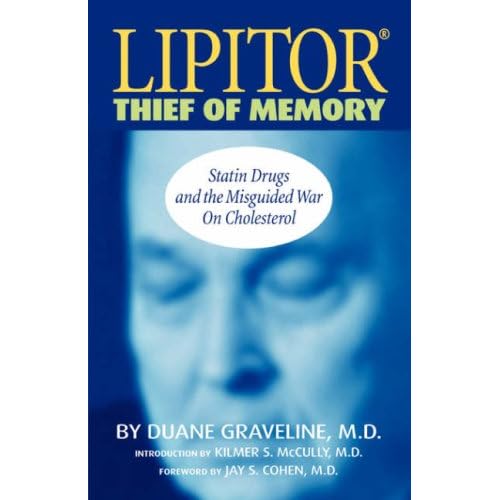
Duane Graveline MD MPH was a former
USAF Flight Surgeon, NASA Astronaut and retired family doctor. He wrote a provocative book calledLipitor Thief of Memory In it, he talks about his experience with taking Lipitor and how he temporarily loses his short-term memory. He goes on to warn people about what needs to be done to prevent the devastating side effects to body and mind from the escalating use of the statin drugs.


Statin drugs work by inhibiting the
HMG-CoA reductase enzyme
which is what lowers the LDL (bad) cholesterol. At the same time, it also inhibits the production of Coenzyme Q10. Every human cell contains a cellular power plant called the "Mitochondria." This is where food is converted to energy. Ninety-five percent of all the human body’s energy requirements (ATP) is converted with the aid of CoQ10. The heart and the liver have the highest energy requirements and without CoQ10, it could eventually lead to a heart attack and/or liver failure.

Dr. James Whittaker petitioned the FDA in 2002 to put a warning label on every bottle of statin drugs. The warning label read:

Warning :
HMG CoA reductase inhibitors block the endogenous biosynthesis of an essential co-factor, coenzyme Qlo, required for energy production. A deficiency of coenzyme QlO is associated with impairment of myocardial function, with liver dysfunction, and with myopathies (including cardiomyopathy and congestive heart failure). All patients taking HMG CoA
reductase inhibitors should therefore be advised to take 100 to 200 mg per day of supplemental coenzyme Q~
Recent studies have shown that the antioxidant properties of Coenzyme Q10 benefit the body and the brain in animal models. Some of these studies indicate that Coenzyme Q10 protects the brain from
neurodegenerative disease such as Parkinson's, although it does not relieve the symptoms. Dosage was 300 mg per day. Consumption of 100 to 200 mg per day of CoQ10 can reverse CoQ10 depletion induced by statins. It is interesting to note that Merck Pharmaceuticals has obtained a patent for the combination of CoQ10 with statins in one prescription dose.

I took my parents off of Zocor about 5 years ago after discovering that heart disease is not a disease of high cholesterol. Most people who die of a heart attack or stroke do not have high cholesterol and statins could actually cause you to have a heart attack. Read two of my other posts on this subject.

The Cholestrerol Conspiracy

Debunking The Cholesterol Myth

In addition to that, my father had p
eripheral neuropathy (numbness and pain) in his hands and lower legs, pain in his spine and memory loss. The pain in his spine was so great that we were scheduled for a back operation with an orthopedic surgeon. For many years, he got steroid shots in his spine every so often to ease the pain. We got another opinion from a Neurosurgeon and decided against the surgery. We opted to try physical therapy, changes in diet, a pharmaceutical-grade multivitamin and stopping the statin drug Zocor.

He has been pain free for over five years now. I am so glad we did not do the operation on his back. Even his nagging arthritis is mostly gone. We went to the doctor recently and found that his cholesterol is normal without the use of statin drugs. Here is the kicker, though. Our doctor asked me if I would like to put him back on Zocor. Can you believe that? I was almost speechless.

I am angry though. Although I cannot prove it, I strongly suspect that all those years of taking Zocor is one of the root causes of their physical and mental decline. Lowering their LDL cholesterol and depriving their cells of Coenzyme Q10 for all those years was not a good thing if it caused them to have neurodegenerative diseases like Parkinson's and Alzheimer's. I will wait for the study by Dr. Huang to be completed and see what they find.

Lowering your LDL cholesterol will NOT keep you from having a heart attack. Click here to find out why you can have PERFECTLY NORMAL LDL cholesterol and still have heart disease. For those of you who are interested in raising your HDL cholesterol naturally and are not getting answers from your doctor on how to do this without drugs, I suggest a three pronged approach:

  1. Eat a healty diet that encourages you to eat those good carbohydrates, good fats, and good proteins.
  2. Start a modest but consistent exercise program.
  3. Take high-quality nutritional supplements every day

Other articles of note:

Cholesterol is NOT the Cause of Heart DiseaseHigh Cholesterol Does Not Cause Heart Disease


**Update as of February 2012
The FDA has finally seen fit to put a "Black Box" warning on all statin (cholesterol lowering) drugs. It warns of a connection between the use of statin drugs (Zocor, Lipitor, Crestor, Mevacor, etc.) and getting diabetes and memory loss and confusion (dementia, Alzheimers, Parkinson's, etc.).
Click on the following links to read about it.

Forbes - The Latest Statin Scare: Are You At Risk
Black Box Warning Labels for Statin Drugs

Saturday, February 04, 2006

Nutritional supplements slow aging of brain

A study published in the December 2004 issue of the American Journal of Clinical Nutrition has found a correlation between nutritional supplement use and improved cognition later in life. Cognition is the mental process of thought, including perception, reasoning, intuition and memory.

The researchers found that supplement users scored higher on mental speed tests than those who did not take supplements. Fish oil supplement users were found to have greater red blood cell membrane omega-3 fatty acid content, which was correlated with improved cognitive function later in life. A greater ratio of docosahexaenoic acid (DHA) to arachidonic acid was also related to better cognitive function.

The results of this study are consistent with previous reports that dietary supplements may reduce dementia risk and suggest that optimizing omega-3 fatty acid intake may improve the retention of cognitive function in the elderly.