Watch actor David Hyde Pierce share his story about how Alzheimer's disease affected his family (after a 30 second commercial). His father and grandfather suffered from the disease.
Watch CBS Videos Online
A politician running for state senate knocked on my door yesterday. She told me she was running for the office and wondered if there were any issues that were important to me. I invited her in to meet my 90 year old father who has Parkinson's disease and showed her pictures of my mother who died last year from Alzheimer's disease. I told her that I believed that these diseases will grow to epidemic proportions unless someone steps into the ring to fight it with an act of PREVENTION! An ounce of prevention is worth a pound of cure. In this election year, I am looking for a politician that will fix health care. One of the big elements of that will be a plan to prevent disease before it happens.
It starts by teaching our children how to eat better and to be more physically and mentally active. There is a strong link between obesity and dementia. Obesity is a huge risk factor for Alzheimer's. Get the pop machines and the junk food out of our schools. This is a message that will not get much support from the medical community and the pharmaceutical industry. Preventing people from getting sick in the first place will cut their income and profits dramatically.
Studies had shown, that exercise - even in the form of everyday activity - could stave off dementia, reducing the risk by 30% to 40%.
Diets rich in vitamin C cut the risk by about 15% and a very good study had shown that sticking closely to a Mediterranean diet could cut the chances of developing dementia by up to 40%.
Just as with heart disease and stroke, reducing blood pressure is also protective - yet less than one in three people who need it have their blood pressure properly managed.
Scientists think that as many as 4.5 million Americans (26 million people worldwide) suffer from AD. But in the next few decades, that number is expected to skyrocket by 350% as America's baby-boomers age. According to a recent study from John Hopkins University, by 2050, Asia will have 62.8 million of the world's 106 million Alzheimer's patients. The disease usually begins after age 60, and risk goes up with age. While younger people also may get AD, it is much less common. About 10 percent of men and women ages 65 to 74 have AD, and nearly half of those age 85 and older may have the disease. It is important to note, however, that AD is not a normal part of aging.
This year Alzheimer’s is costing Medicare $91 billion and Medicaid $21 billion. By 2015, the two programs will be spending $210 billion just on individuals with Alzheimer’s. Finding a "cure" would be beneficial. Prevention is something we could do now. Prevention will cost us a lot less in the long run. Prevention is the best cure that we have right now. There are no bad side effects to prevention.
Showing posts with label Dementia. Show all posts
Showing posts with label Dementia. Show all posts
Sunday, September 14, 2008


Sunday, August 10, 2008
Do Statins Make You Stupid?
 World-wide, some 25 million people take statins, including Zocor, Mevacor, Crestor, Pravachol and Vytorin to lower their cholesterol. Could they also be lowering their IQ at the same time?
In a recent Wall Street Journal article, Orli Etingin, vice chairman of medicine at New York Presbyterian Hospital and the director of the Iris Cantor Women's Health Center, declared that, "This drug makes women stupid." She told of a typical patient in her 40s, unable to concentrate or recall words. Tests found nothing amiss, but when the woman stopped taking Lipitor, the symptoms vanished. When she resumed taking Lipitor, they returned. I've seen this in maybe two dozen patients," Dr. Etingin said later, adding that they did better on other statins. "This is just observational, of course. We really need more studies, particularly on cognitive effects and women."
Researchers at the University of California at San Diego are nearing completion of a randomized controlled trial examining the effects of statins on thinking, mood, behavior, and quality of life. Separately, the UCSD researchers are collecting anecdotal experiences of patients, good and bad, on statins; memory problems are the second most common side effect, after muscle aches, in about 5,000 reports to date.
"We have some compelling cases," says Beatrice Golomb, the study's lead researcher. In one of them, a San Diego woman, Jane Brunzie, was so forgetful that her daughter was investigating Alzheimer's care for her and refused to let her babysit for her 9-year-old granddaughter. Then the mother stopped taking a statin. "Literally, within eight days, I was back to normal -- it was that dramatic," says Mrs. Brunzie, 69 years old.Doctors put her on different statins three more times. "They'd say, 'Here, try these samples.' Doctors don't want to give up on it," she says. "Within a few days of starting another one, I'd start losing my words again," says Mrs. Brunzie, who has gone back to volunteering at the local elementary school she loves and is trying to bring her cholesterol down with dietary changes instead."I feel very blessed -- I got about 99% of my memory back," she adds. "But I worry about people like me who are starting to lose their words who may think they have just normal aging and it may not be."
The brain is largely made of of cholesterol, much of it in the myelin sheaths
 that insulate nerve cells and in the synapses that transmit nerve impulses. Lowering cholesterol could slow the connections that facilitate thought and memory. Statins may also lead to the formation of abnormal proteins seen in the brains of Alzheimer's patients.
The cognitive changes can affect men as well as women. But women on statins are often simultaneously losing estrogen due to menopause, which can also cause cognitive changes. "Women are getting hit with a double whammy," says Elizabeth Lee Vliet, a women's health physician in Tucson, Ariz., who has a background in neuroendochronology.
According to the "LDL hypothesis," lowering bad cholesterol prevents plaque buildup in the arteries. And that, in theory, reduces the risk of heart attack and stroke. Vytorin -- which combines Merck's Zocor, a statin, and Schering-Plough's Zetia, a new class of LDL-lowering medicine -- does lower bad cholesterol but has also been proven to thicken the plaque in the carotid arteries (in the neck) of patients more than in those who took Zocor alone -- apparently contradicting the "LDL hypothesis." A blocked carotid artery can lead to restricted blood flow to the brain and a stroke.
Another cholesterol lowering drug called, Torcetrapib (Pfizer) represented a new class of cholesterol medicine designed not only to lower LDL cholesterol but also to boost HDL, or "good" cholesterol. But the results of two large-scale studies linked torcetrapib to deaths and showed it failed to prevent the buildup of arterial plaque. Soon after, Pfizer abandoned the project.
Myth: High cholesterol Goes Hand In Hand With Heart Disease
In the Framingham heart study done near Boston that spanned 30 years , the researchers concluded that high cholesterol was a risk factor for heart
 disease, but when one really dissects the data, one must question how they came to that conclusion. For example, when the participants of the study are plotted on a graph it clearly shows that those with cholesterol levels between 182 and 222 did not survive as long as those with higher cholesterol levels of between 222 and 261. The study shows that about half the people with heart disease had low cholesterol, and half the people without heart disease had high cholesterol.
 Most studies have found that for women, high cholesterol is not a risk factor for heart disease at all - in fact, the death rate for women is five times higher in those with very low cholesterol. In a Canadian study that followed 5000 healthy middle-aged men for 12 years, they found that high cholesterol was not associated with heart disease at all. And in another study done at the University Hospital in Toronto that looked at cholesterol levels in 120 men that previously had heart attacks, they found that just as many men that had second heart attacks had low cholesterol levels as those that had high.
Why is it that over half the people who die of heart disease do not have high cholesterol? Could it be that cholesterol is not the main problem?
A personal note
My parents were taking Zocor for a number of years. At $60 per month, it was quite expensive. My mother died of Alzheimer's disease last year. My father has Parkinson's related dementia too. Before I took him off statins, my dad was experiencing muscle pain, numbness, memory loss, muscle weakness and many other side effects listed on the Zocor label. Although they claim that these side effects are rare, I believe that they are just under reported. Read the article below on, Is Your Doctor in Denial?
Other Side Effects Of Statins
Talk to your physician about the side effects of statin drugs which might include:
Inability to concentrate
Depression
Confusion
Impotence
Amnesia
Lowered sex drive
Disorientation
Violent BehaviorWeakened immune system
Shortness of breath
Liver damage
Fatigue
Kidney failure
Nerve pain
SuicideDeath
Muscle weakness
Rhabdomyolysis (painful bursting of muscle cells)
Getting Less Of What You Need
Statins block the production of Co enzyme Q10 in your body. Why is that so dangerous? Coenzyme Q10 is very important for heart function, it acts as an antioxidant in conjunction with Vitamin E, and it is important in energy metabolism in the mitochondria of muscles, which is why muscle pain is a common side effect of statin drugs. Your heart is one of your biggest and most important muscles. If your heart is weakened by the lack of Co enzyme Q10, statins could actually cause you to have a heart attack. Co enzyme Q10 is important for healthy brain function as well, and when Co enzyme Q10 levels are low, through statin use or otherwise, memory is affected.
Lower Your Chance Of Heart Disease Naturally
Eskimos, who eat a traditional diet of almost pure saturated fat (whale and seal blubber) have almost a zero incidence of heart disease. Danes, on the other hand, eat a high fat diet but have a much higher occurrence of heart disease. What's the difference? Eskimos eat a high-fat, high-cholesterol diet but one rich in fish, especially those containing the omega-3 fatty acids EPA and docosahexaenoic acid (DHA). These fatty acids lower plasma of very low density lipoproteins (VLDL) and triglyceride (a type of fat in your blood) concentrations by depressing synthesis of triglycerides in the liver.
If you are not eating at least 3 meals a week that includes fatty, oily fish, you might want to consider taking some pharmaceutical-grade fish oil pills. These are more concentrated and purer than your regular grocery store brand. They are also less likely to give you the "fish burps" and you will have to take half as many pills because of the concentration.
Researchers at University Hospital in Basel Switzerland did a statistical analysis, called a “meta-analysis” of 97 double-blind, controlled studies, involving 137,140 people who received a heart-disease “intervention (statins, niacin, two other pharmaceutical drugs, diet or fish oil) and 138,976 who received a placebo. The remarkable findings: Fish oil reduced cardiac deaths by 32 percent; statins by 22 percent. Fish oil cut deaths from all causes by 23 percent; statins, by 13 percent. That means, say experts, that omega-3 fish oil was 45 per more effective than statins in preventing heart fatalities and 77 percent better at saving lives in general. (Marco Studer., Arch Intern Med 2005; 165:725-730)
Fish oil’s strong anti inflammatory activity is also a prime reason for its cardiovascular protection, say the Swiss scientists. Other reasons fish oil might beat statins: Omega-3s help regulate heart rhythms, preventing sudden cardiac deaths; thwart formation of blood clots; improve endothelial and vascular function, reduce triglycerides, lower blood pressure, and raise good HDL cholesterol. (Mori TA, Curr Atheroscler Rep 2004 Nov; 6(6): 461-7)
Fish oil has NONE of the side effects found with statins.
First Step Therapy
Doctors have always been encouraged by the medical community to help their patients to become heart healthy by prescribing healthy lifestyle changes like diet and exercise prior to beginning any medication at the early signs of these diseases. This is referred to as First-Step Therapy. Physicians have for the most part been very discouraged with the results of First-Step Therapy and have a tendency to simply write a prescription without offering their patients an opportunity to improve their clinical situation with healthy lifestyle changes. This is happening because physicians believe that their patients will simply not be able to make these lifestyle changes or even if they do, they will not be that effective. This attitude along with the tremendous amount of marketing by the pharmaceutical industry directly to the patient has led individuals to believe that their best option is to just begin taking medication. However, it is becoming more evident each and every day that there is also an inherit risk with taking any medication. In fact, adverse drug reactions to properly prescribed and properly administered medication are the FOURTH leading cause of death in this country.
Fish oil’s strong anti inflammatory activity is also a prime reason for its cardiovascular protection, say the Swiss scientists. Other reasons fish oil might beat statins: Omega-3s help regulate heart rhythms, preventing sudden cardiac deaths; thwart formation of blood clots; improve endothelial and vascular function, reduce triglycerides, lower blood pressure, and raise good HDL cholesterol. (Mori TA, Curr Atheroscler Rep 2004 Nov; 6(6): 461-7)
Fish oil has NONE of the side effects found with statins.
First Step Therapy
Doctors have always been encouraged by the medical community to help their patients to become heart healthy by prescribing healthy lifestyle changes like diet and exercise prior to beginning any medication at the early signs of these diseases. This is referred to as First-Step Therapy. Physicians have for the most part been very discouraged with the results of First-Step Therapy and have a tendency to simply write a prescription without offering their patients an opportunity to improve their clinical situation with healthy lifestyle changes. This is happening because physicians believe that their patients will simply not be able to make these lifestyle changes or even if they do, they will not be that effective. This attitude along with the tremendous amount of marketing by the pharmaceutical industry directly to the patient has led individuals to believe that their best option is to just begin taking medication. However, it is becoming more evident each and every day that there is also an inherit risk with taking any medication. In fact, adverse drug reactions to properly prescribed and properly administered medication are the FOURTH leading cause of death in this country.
Sources:
Statins May Spur Dementia
Is Your Doctor in Denial?
Can a Drug That Helps Hearts Be Harmful to the Brain?
In wake of Vytorin study, some heart doctors reassess LDL factor
Diet Comparable To Statin Drugs In Lowering LDL Cholesterol
Omega-3 fatty acids reduce mortality risk more effectively than statin drugs
Monday, June 09, 2008
Can Cholesterol Lowering Drugs Cause Parkinson's Disease?
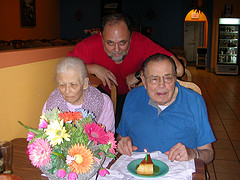 My mother died of Alzheimer's disease about this time last year. Click here to read about it. My father will be 90 next month and he is suffering from Parkinson's and related dementia. Back in the 1970's or 1980's, their doctor put them both on a drug called Zocor to lower their cholesterol. Drugs like Zocor, Lipitor, Crestor and Pravachol are in a class of drugs called "statins."
Many of these drugs have known side effects like:
- Abdominal Pain
- Arrhythmia
- Asthenia
- Myalgia
- Myopathy
- Pancreatitis
- Rhabdomyolysis
- Kidney Failure/Dialysis
- Hospitalization
- Death
Scientist raises fears over statins and Parkinson's +Here are some highlights from the article:
Dr Xue Mei Huang, an assistant professor of neurology at the University of North Carolina's School of Medicine, was "very concerned" by her study's findings and plans a 16,000-patient survey to examine the possible role of statins.
Dr Huang, whose study was published in the journal Movement Disorders, said there was a well-established link between Parkinson's and apoE2, a gene associated with lower LDL cholesterol.
Participants in her study with LDL levels lower than 114 mg/dl (milligrams per decilitre) had a 3.5-fold higher risk of Parkinson's than participants with LDL levels of more than 138 mg/dl.
It was unclear, however, whether the low cholesterol levels in those with Parkinson's predated the disease.
Asked whether she was worried by the initial results, Dr Huang told Chemical and Industry magazine: "Yes I am very concerned, which is why I am planning a 16,000-patient study to examine the possible role of statins."
Dr. Ronald Ziman, a California neurologist and board member of the American Parkinson Disease Association, said he is intrigued by the study.
"Parkinson's is a neurodegenerative illness like Alzheimer's. We know lipid profiles have a bearing on Alzheimer's, and there are a lot of similarities between Parkinson's and Alzheimer's. So I wouldn't be surprised by the link" between LDL and Parkinson's that the University of North Carolina team described," Dr. Ziman said.
Duane Graveline MD MPH was a former USAF Flight Surgeon, NASA Astronaut and retired family doctor. He wrote a provocative book calledLipitor Thief of Memory
 In it, he talks about his experience with taking Lipitor and how he temporarily loses his short-term memory. He goes on
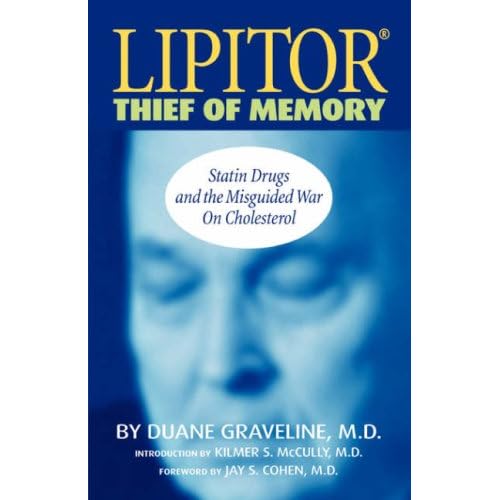 to warn people about what needs to be done to prevent the devastating side effects to body and mind from the escalating use of the statin drugs.
Statin drugs work by inhibiting the HMG-CoA reductase enzyme which is what lowers the LDL (bad) cholesterol. At the same time, it also inhibits the production of Coenzyme Q10. Every human cell contains a cellular power plant called the "Mitochondria." This is where food is converted to energy. Ninety-five percent of all the human body’s energy requirements (ATP) is converted with the aid of CoQ10. The heart and the liver have the highest energy requirements and without CoQ10, it could eventually lead to a heart attack and/or liver failure.
Dr. James Whittaker petitioned the FDA in 2002 to put a warning label on every bottle of statin drugs. The warning label read:
Warning :
HMG CoA reductase inhibitors block the endogenous biosynthesis of an essential co-factor, coenzyme Qlo, required for energy production. A deficiency of coenzyme QlO is associated with impairment of myocardial function, with liver dysfunction, and with myopathies (including cardiomyopathy and congestive heart failure). All patients taking HMG CoA
reductase inhibitors should therefore be advised to take 100 to 200 mg per day of supplemental coenzyme Q~Recent studies have shown that the antioxidant properties of Coenzyme Q10 benefit the body and the brain in animal models. Some of these studies indicate that Coenzyme Q10 protects the brain from
neurodegenerative disease such as Parkinson's, although it does not relieve the symptoms. Dosage was 300 mg per day. Consumption of 100 to 200 mg per day of CoQ10 can reverse CoQ10 depletion induced by statins. It is interesting to note that Merck Pharmaceuticals has obtained a patent for the combination of CoQ10 with statins in one prescription dose.I took my parents off of Zocor about 5 years ago after discovering that heart disease is not a disease of high cholesterol. Most people who die of a heart attack or stroke do not have high cholesterol and statins could actually cause you to have a heart attack. Read two of my other posts on this subject.
The Cholestrerol Conspiracy
Debunking The Cholesterol Myth
In addition to that, my father had peripheral neuropathy (numbness and pain) in his hands and lower legs, pain in his spine and memory loss. The pain in his spine was so great that we were scheduled for a back operation with an orthopedic surgeon. For many years, he got steroid shots in his spine every so often to ease the pain. We got another opinion from a Neurosurgeon and decided against the surgery. We opted to try physical therapy, changes in diet, a pharmaceutical-grade multivitamin and stopping the statin drug Zocor.
He has been pain free for over five years now. I am so glad we did not do the operation on his back. Even his nagging arthritis is mostly gone. We went to the doctor recently and found that his cholesterol is normal without the use of statin drugs. Here is the kicker, though. Our doctor asked me if I would like to put him back on Zocor. Can you believe that? I was almost speechless.
I am angry though. Although I cannot prove it, I strongly suspect that all those years of taking Zocor is one of the root causes of their physical and mental decline. Lowering their LDL cholesterol and depriving their cells of Coenzyme Q10 for all those years was not a good thing if it caused them to have neurodegenerative diseases like Parkinson's and Alzheimer's. I will wait for the study by Dr. Huang to be completed and see what they find.
Lowering your LDL cholesterol will NOT keep you from having a heart attack. Click here to find out why you can have PERFECTLY NORMAL LDL cholesterol and still have heart disease. For those of you who are interested in raising your HDL cholesterol naturally and are not getting answers from your doctor on how to do this without drugs, I suggest a three pronged approach:
- Eat a healty diet that encourages you to eat those good carbohydrates, good fats, and good proteins.
- Start a modest but consistent exercise program.
- Take high-quality nutritional supplements every day
Other articles of note:
Cholesterol is NOT the Cause of Heart DiseaseHigh Cholesterol Does Not Cause Heart Disease
**Update as of February 2012
The FDA has finally seen fit to put a "Black Box" warning on all statin (cholesterol lowering) drugs. It warns of a connection between the use of statin drugs (Zocor, Lipitor, Crestor, Mevacor, etc.) and getting diabetes and memory loss and confusion (dementia, Alzheimers, Parkinson's, etc.).
Click on the following links to read about it.
Forbes - The Latest Statin Scare: Are You At Risk
Black Box Warning Labels for Statin Drugs
Friday, January 04, 2008
Alzheimer's Prevention

Walking and Moderate Exercise Help Prevent Dementia
Seniors who regularly walk and get other forms of moderate exercise appear to significantly lower their risk of developing vascular dementia, the second most common form of dementia after Alzheimer’s disease, according to a newly published study.
The four-year study involved 749 men and women in Italy who were over age 65 and did not have memory problems at the beginning of the study. Researchers measured the amount of energy exerted in the participants’ weekly physical activities, including walking, climbing stairs, and moderate activities, such as house and yard work, gardening, and light carpentry. By the end of the study, 54 people developed Alzheimer’s disease and 27 developed vascular dementia.
The study found the top one-third of participants who exerted the most energy walking were 27 percent less likely to develop vascular dementia than those people in the bottom one-third of the group. Participants who scored in the top one-third for the most energy exerted in moderate activities lowered their risk of vascular dementia by 29% and people who scored in the top one-third for total physical activity lowered their risk by 24% compared to those in the bottom one-third.
“Our findings show moderate physical activity, such as walking, and all physical activities combined lowered the risk of vascular dementia in the elderly independent of several socio-demographic, genetic and medical factors,” said study author Dr. Giovanni Ravaglia, with University Hospital S. Orsola Malpighi, in Bologna, Italy. “It’s important to note that an easy-to-perform moderate activity like walking provided the same cognitive benefits as other, more demanding activities.”
Ravaglia says it’s possible that physical activity may improve cerebral blood flow and lower the risk of cerebrovascular disease, which is a risk factor for vascular dementia, but further research is needed about the mechanisms operating between physical activity and a person’s memory.
Contrary to some reports, the study found that physical activity was not associated with a reduced risk of Alzheimer’s disease, but Ravaglia says more research is needed before concluding that Alzheimer’s disease is not preventable through exercise.
The study, published in the online issue of the medical journal Neurology, was supported by grants from the Italian Ministry of University and Scientific Research.
Key vitamin deficiency linked to tripled risk of dementia: study
Tue Feb 5, 9:25 AM ET
PARIS (AFP) - Lack of folate, also called vitamin B-9, may triple the risk of developing dementia in old age, according to a study published Tuesday.
Researchers in South Korea measured naturally occurring folate levels in 518 elderly persons, none of whom showed any signs of dementia, and then tracked their development over 2.4 years.
At the end of the period, 45 of the patients had developed dementia, including 34 diagnosed with Alzheimer's disease, said the study, published by the British Medical Association's Journal of Neurology, Neurosurgery and Psychiatry.
When the researchers, led by Jin-Sang Yoon of Chonnam National University in Kwangju, South Korea, remeasured folate levels, they uncovered a strong link with the dementia.
Even after other factors were taken into account -- including age, disability, alcohol consumption, weight change -- "the onset of dementia was significantly associated with an exaggerated decline in folate," the researchers concluded.
Folate and folic acid, another form of the compound, are essential for the creation of new cells in the body.
The compound occurs naturally in leafy vegetables such as spinach, turnip greens, lettuces, dried beans and peas and in certain fruits.
An study published last year in The Lancet showed an improvement in short-term memory, mental agility and verbal fluency among persons over 50 who took a daily dose of 800 micrograms (mcg) of folic acid. The US recommended daily dose is 400 mcg.
Taking folic acid before conception and throughout the first trimester helps a mother ensure that her child will not develop certain brain and spinal cord defects, including spina bifida, according to previous research.
Subscribe to:
Posts (Atom)


 My StumbleUpon Page